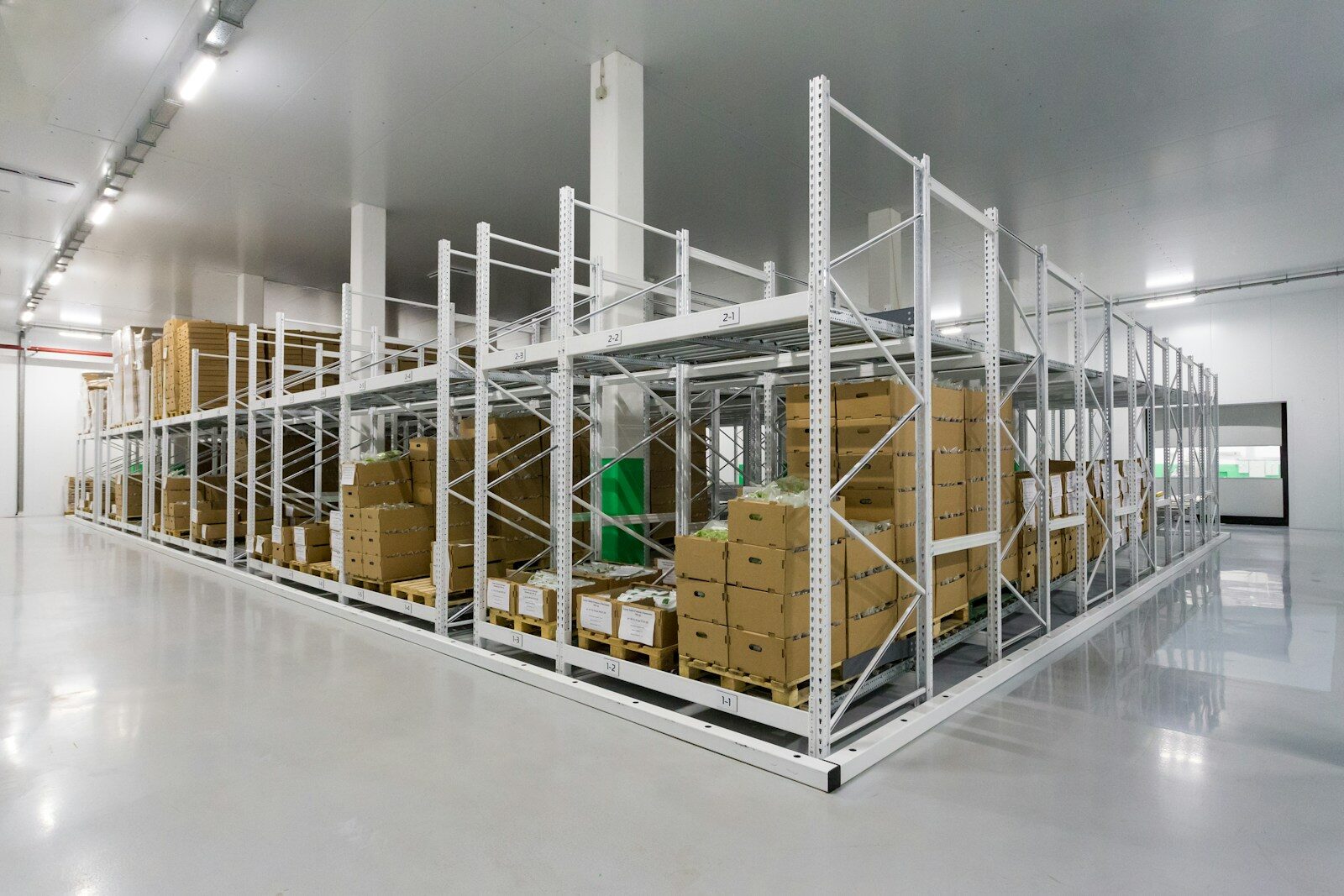
When businesses consider improving warehouse efficiency, the first instinct is often to look at capacity. Could more racking be installed? Would an additional storage area solve the problem? Is it time to move to a larger premises?
These questions are important, but they do not always address the real issue. A warehouse can have plenty of available space and still operate inefficiently if its layout creates unnecessary movement, slows down order picking or makes frequently requested products difficult to access.
Effective warehousing is not simply about finding somewhere to keep goods. It involves organising stock, people, equipment and processes so that products can move through the facility safely and efficiently.
The Problem With a Poorly Planned Layout
Consider a warehouse where popular products are stored at the far end of the building, away from packing and dispatch areas. Staff may spend a significant part of each shift walking between locations rather than picking orders.
Elsewhere, goods awaiting dispatch might obstruct access to incoming deliveries, creating congestion around loading bays. Poorly positioned packing stations can introduce further delays, particularly during busy periods.
Individually, these issues might seem minor. Over weeks and months, however, unnecessary movement and repeated handling can consume valuable working hours, increase operating costs and make it harder to meet delivery deadlines.
Designing a Warehouse Around How Goods Move
A practical warehouse layout should reflect the way products enter, move through and leave the building. This means examining the entire process rather than treating each storage area as a separate space.
Several considerations can make a meaningful difference.
Product demand and picking frequency
Fast-moving items are often best positioned where staff can retrieve them quickly, provided that safety, product characteristics and replenishment requirements are taken into account. Slower-moving stock may be suitable for less accessible locations.
Receiving and dispatch arrangements
Clear routes between goods-in, storage, picking, packing and dispatch help prevent congestion. Separating pedestrian and vehicle movements where appropriate also supports safer working practices.
Storage methods and product characteristics
Pallet racking, shelving, bulk storage and specialist storage systems each suit different requirements. Product dimensions, weight, turnover and handling needs should all influence the choice of arrangement.
Flexibility for changing demand
A layout that works during a quiet period may struggle when order volumes increase seasonally. Allowing for fluctuations in stock levels and activity can help a warehouse adapt without constant rearrangement.
Use Data Before Making Changes
Warehouse improvements do not have to begin with expensive equipment or a complete redesign. Often, the best starting point is to examine what is already happening.
Measuring picking times, identifying frequently travelled routes, reviewing stock accuracy and monitoring congestion can reveal where the biggest inefficiencies lie. Even a simple review of product locations may uncover opportunities to reduce unnecessary journeys.
It is also worth considering how warehouse management systems can support better stock allocation, location control and order prioritisation. Accurate information helps staff find products quickly and reduces the risk of errors during picking and dispatch.
Efficiency Without Compromising Safety
Maximising storage capacity should never come at the expense of safe access, clear walkways or appropriate handling procedures. Overcrowded aisles and poorly planned storage can create risks for employees while making daily operations more difficult.
The aim is to achieve a sensible balance between capacity, accessibility, productivity and safety.
For businesses reviewing their logistics arrangements, warehouse layout deserves attention alongside transport costs, inventory management and delivery performance. A well-organised facility can reduce wasted movement, improve order accuracy and make better use of existing space.
Sometimes, the most effective way to increase warehouse capacity is not to add more shelves. It is to make the space already available work harder.
Photo by Petr.